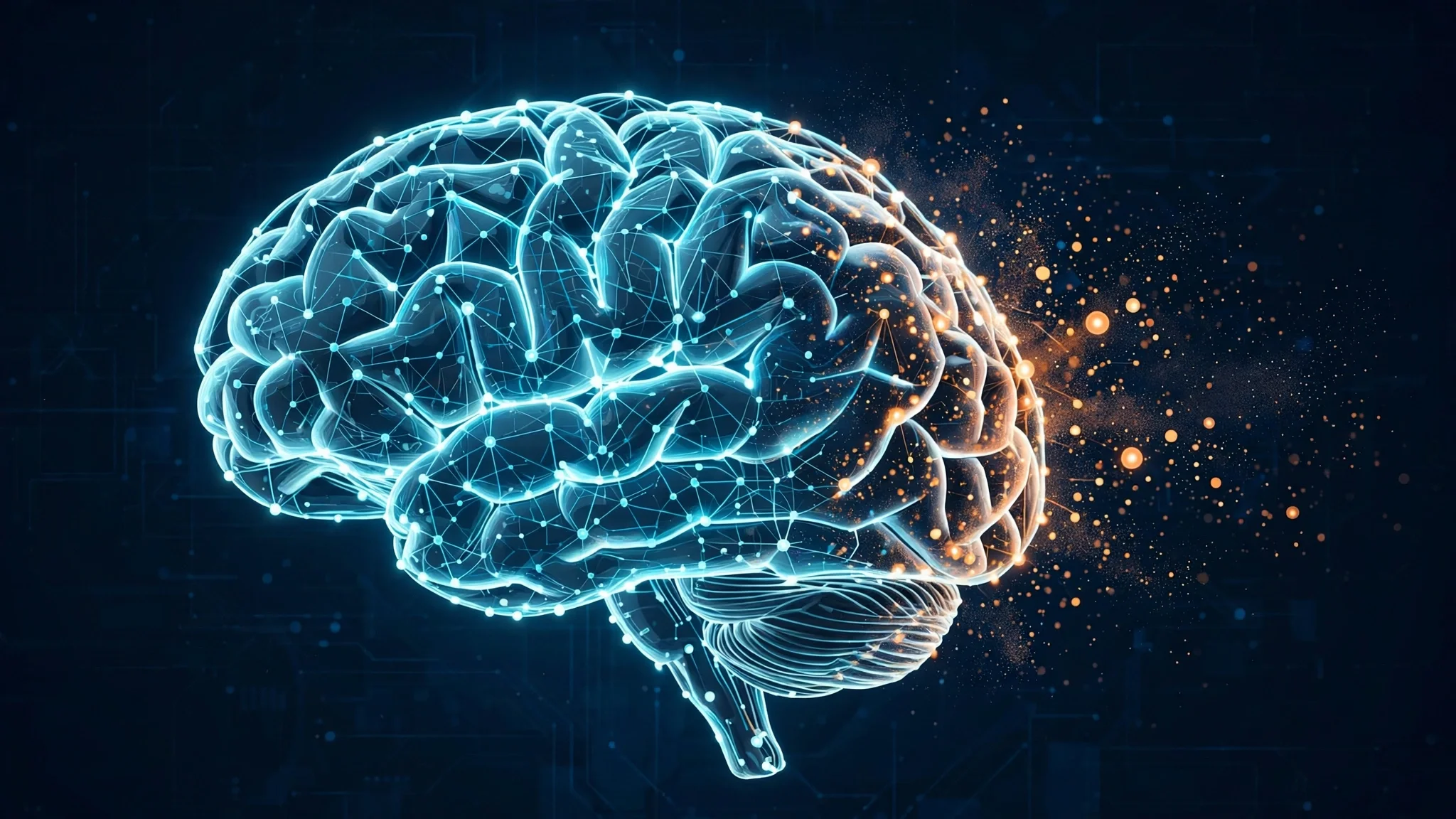
Artificial intelligence models learn from examples collected during training. But what happens when some of that data contains personal information, was used without proper consent, or needs to be withdrawn? Simply deleting files from a dataset folder doesn’t necessarily erase their influence from an already-trained model.
This is where machine unlearning becomes important. This technique aims to reduce or remove the contribution of specific data from a model without always retraining the entire process from scratch. The approach promises efficiency, but its results need careful testing to ensure that “forgetting” isn’t merely a claim.
What Is Machine Unlearning?
Machine unlearning is a collection of methods for making a model no longer retain the influence of specific training examples. Requests may come from users withdrawing consent, organizations discovering problematic data, or development teams needing to correct a dataset.
The goal isn’t simply to delete raw data. During training, models adjust internal parameters based on patterns in the data. Unlearning attempts to alter the model’s state so its behavior approximates that of a model trained without the data requested for removal.
The term “approximates” matters because not all methods provide the same mathematical guarantees. Some approaches pursue strong deletion at high computational cost, while others use approximations for faster results.
Why Deleting Data Alone Isn’t Enough
Imagine a dataset containing thousands of examples, then one personal record is deleted from storage. If the model was previously trained using that record, the model’s parameters don’t automatically revert to their previous state. The model may still remember patterns or reveal partial information through certain outputs.
This risk varies by system type. Classification models can learn how one example affects decision boundaries. Large language models may store associations from training data, though this doesn’t mean every piece of information they’ve seen can be recalled. Therefore, deletion must be designed based on threats and how the model is used.
Common Approaches
- Retraining from scratch. The model is retrained using the cleaned dataset. This can serve as a strong baseline, but it’s expensive for large models and frequent retraining cycles.
- Parameter-based unlearning. Algorithms adjust specific parts of the model to reduce the influence of target data. Costs may be lower, but result quality depends on the method and model structure.
- Model or data partitioning from the start. Systems are trained in separate components so that later deletion only requires retraining affected portions. This strategy must be planned during design, not always easily added afterward.
- Deletion in supporting layers. For retrieval-based applications, caches, or vector databases, removing documents from the index and rebuilding the index can eliminate sources the system might draw from. However, this differs from removing data influence that has already entered model weights.
Practical Workflow for Implementing Unlearning
- Locate all data copies. Record the main dataset, preprocessing results, caches, search indexes, snapshots, and relevant backups. Deletion is incomplete if performed in only one location.
- Trace model origins. Maintain information on dataset versions, experiments, checkpoints, and derived models. Without this trail, teams struggle to identify which models are affected.
- Define request scope. Ensure target data identity and deletion reasons are clear. Limit access to sensitive data during the process.
- Select method and baseline. Compare unlearning results with the pre-change model and, if possible, a reference model trained without target data. Record costs, time, and accuracy impact.
- Test before replacing the active model. Run privacy testing, task quality checks, regression tests, and security evaluations. Save results as evidence that changes meet established criteria.
- Document and monitor results. Document the replacement model, handled data, method limitations, execution time, and recovery procedures if quality degrades.
How to Verify a Model Truly “Forgets”
No single test fits all cases. Teams can use membership inference testing to assess whether someone can still guess that an example was in the training data. Output testing can also check whether target information remains easily recoverable.
Conversely, the model must continue working on data not requested for removal. Measure accuracy, error rates, answer consistency, latency, and impact on relevant data groups. If the model loses too much general capability, unlearning may be too aggressive. Good results balance reducing target data influence with preserving legitimate function.
Such testing provides evidence, not universal guarantees. Strong claims should explain assumptions, attack types tested, evaluation boundaries, and whether methods provide formal guarantees or only empirical approaches.
Limitations and Considerations
Machine unlearning isn’t a magic button for all privacy obligations. Models, logs, datasets, search indexes, backups, and distributed copies may require different actions. In generative AI services, responses can also be influenced by conversation context or external sources, not just model weights.
Data deletion must also be distinguished from legal compliance. Requirements and exceptions depend on jurisdiction, processing purpose, and applicable legal basis. Teams should work with privacy and legal officers, not assume one technical method automatically resolves all obligations.
Conclusion
Machine unlearning offers a way to handle data that should no longer influence AI models. To be trustworthy, implementation requires data inventory, version tracking, appropriate method selection, privacy testing, and quality evaluation before deploying replacement models. For many organizations, the best first step is designing clean data governance and training lineage from the start. This way, deletion requests can be handled measurably, not through guesswork.
Komentar (0)
Belum ada komentar. Jadilah yang pertama berkomentar.