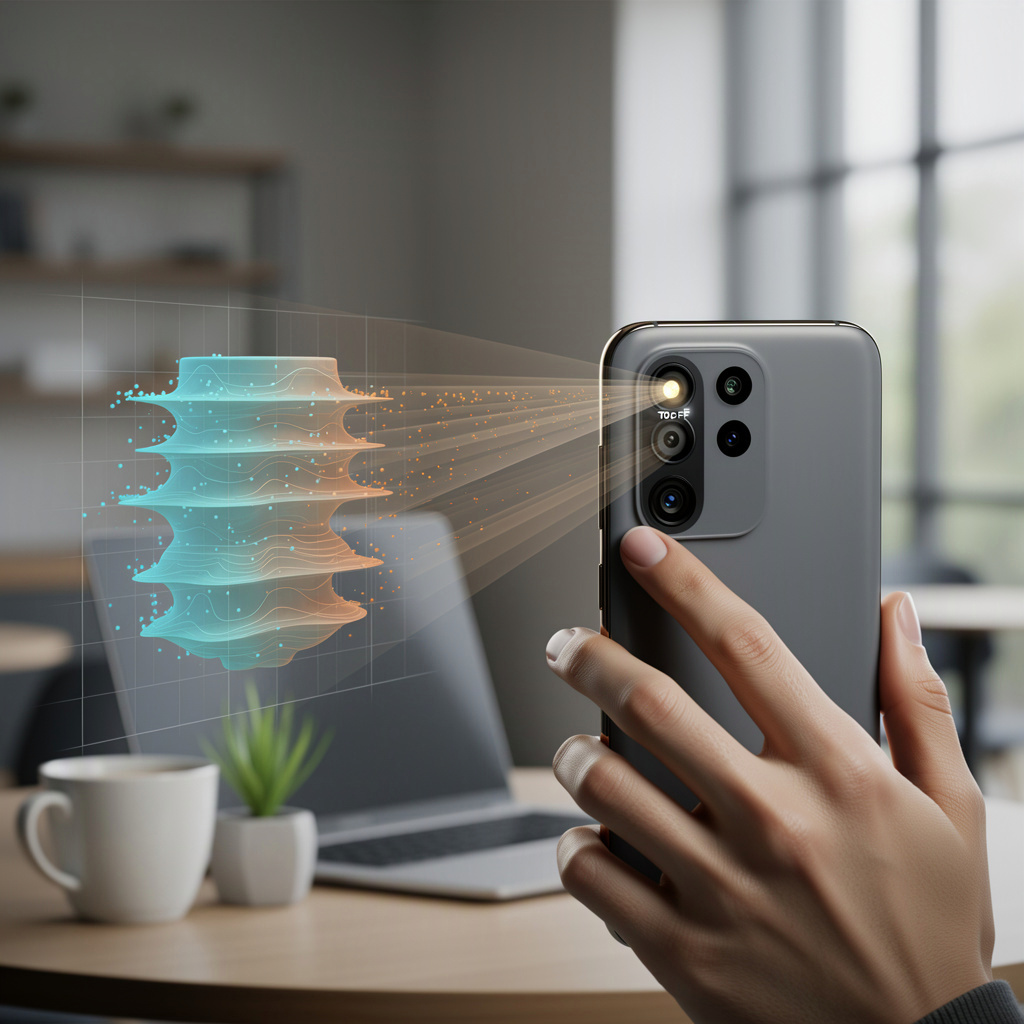
When reading the camera specifications of a mid-range or high-end smartphone, you may come across the term ToF sensor, short for Time-of-Flight. Unlike the main or ultrawide camera lenses, which capture colour and light, this component has a specific job: measuring the distance between the device and the objects in front of it. Understanding what a ToF sensor does helps you look beyond the number of lenses in a camera module and assess the practical value of each hardware component.
What Is a ToF Sensor and How Does It Work?
A ToF sensor is a type of depth sensor that emits infrared light toward an object and measures how long the light takes to reflect back to the sensor. Because the speed of light is known, the device can calculate the object’s distance from the light’s round-trip travel time.
Consumer devices generally use two ToF measurement methods:
- dToF (Direct Time-of-Flight): Measures the travel time of a light pulse directly from the emitter to the receiver. This method can provide fast measurements and is often found in LiDAR scanners used in higher-end devices.
- iToF (Indirect Time-of-Flight): Measures the phase shift between the emitted light wave and the light received after reflection. This approach is more common in smartphones because it can be more cost-effective to manufacture.
The light emitted by a ToF sensor is in the infrared spectrum. It is invisible to the human eye and does not interfere with the main camera lens when taking photographs.
How ToF Differs from Other Depth-Sensing Technologies
Before ToF sensors became popular, many manufacturers relied on dual-camera systems and stereoscopic techniques to estimate depth. This approach works in a way that resembles human vision: it compares two images captured from slightly different angles to calculate distance. However, it depends heavily on the texture and contrast of an object. Plain surfaces, such as a white wall, can therefore be difficult for stereoscopic algorithms to interpret.
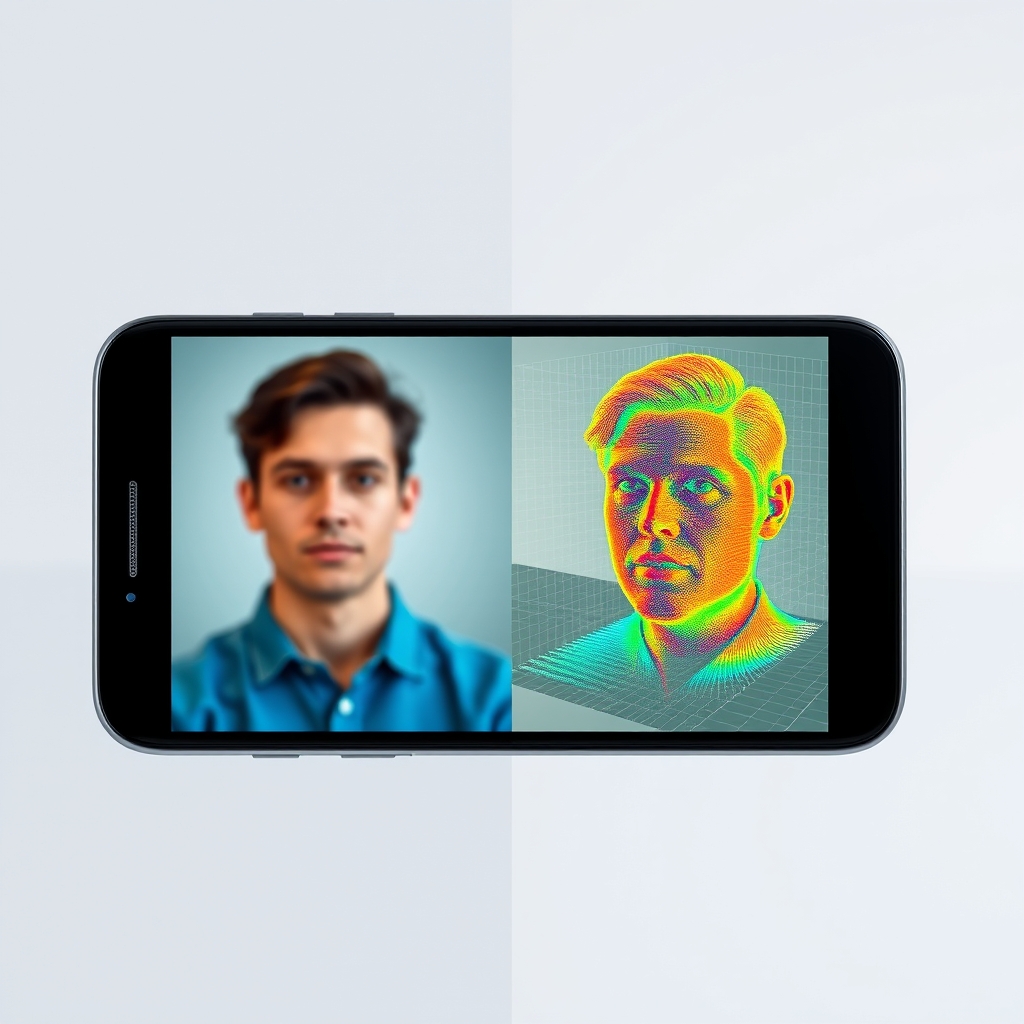
A ToF sensor addresses this limitation by actively emitting its own light. It can therefore measure distance even when an object has little visible texture or the surrounding environment is poorly lit. This can make ToF more reliable than depth estimates based solely on software.
Main Uses of ToF Sensors in Smartphones
A ToF sensor is more than a decorative addition to a rear camera module. It can provide several technical benefits that affect everyday use.
Improving Portrait Mode
Portrait mode needs to separate the main subject from the background accurately to produce natural-looking bokeh. A ToF sensor can provide a three-dimensional depth map in real time. The image processor can use this information to blur the background without incorrectly cutting out details such as hair or the edges of clothing. As a result, smartphone portraits can have cleaner subject boundaries and a more polished, camera-like appearance.
Helping Autofocus in Low Light
Conventional autofocus systems, such as Phase Detection Autofocus (PDAF), need sufficient light to detect contrast. In a dark room, the camera may struggle to find focus. A ToF sensor can provide an initial distance measurement quickly, helping the lens actuator adjust the optical elements without relying entirely on trial and error. This can reduce the delay between pressing the shutter button and capturing a photograph.
Supporting Augmented Reality (AR)
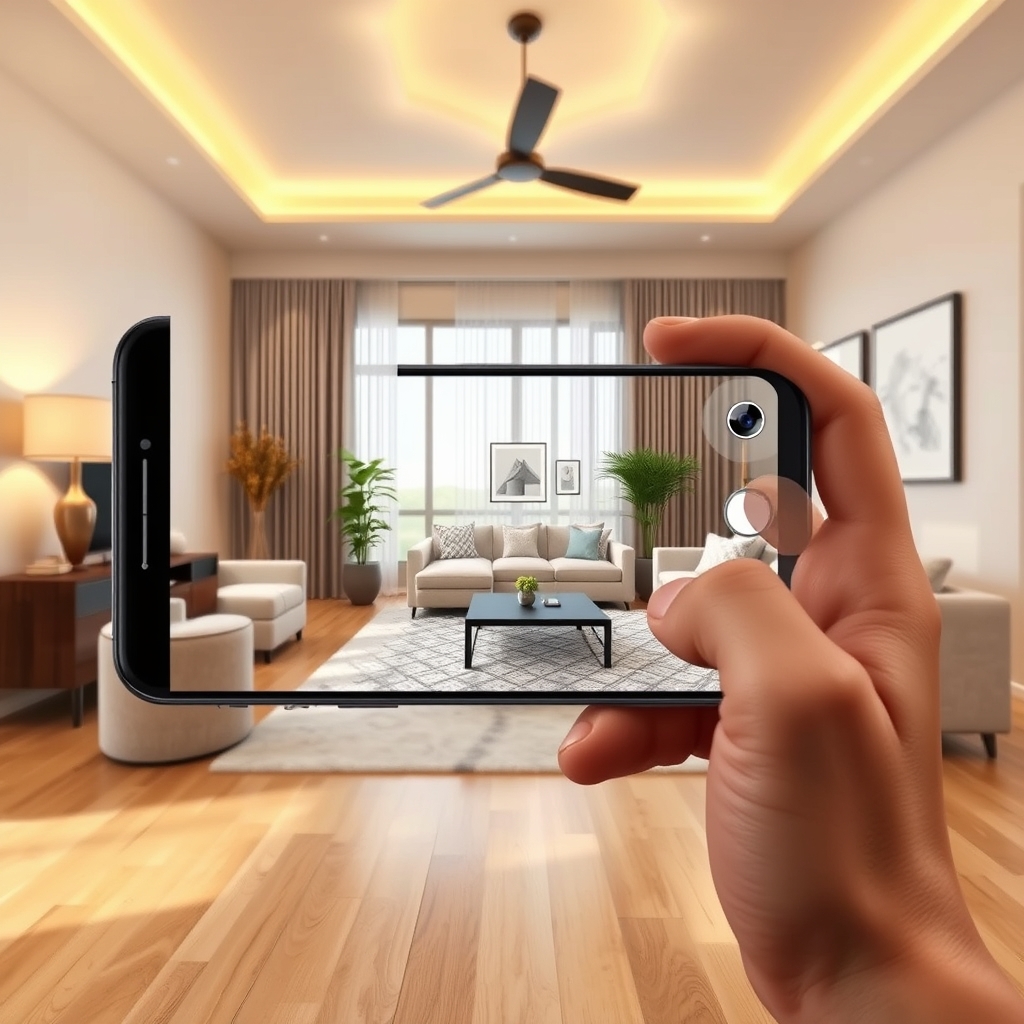
Augmented Reality applications need an accurate understanding of physical space so that virtual objects can be placed convincingly in the real world. A ToF sensor can scan the surrounding environment and generate depth information in real time. For example, when an interior-design app lets you place virtual furniture in a living room, depth data can help a virtual table or chair sit on the floor rather than appear to float or pass through a carpet.
Limitations of ToF Sensors
Despite their advantages, ToF sensors have physical limitations that are worth understanding so you can keep your expectations realistic.
First, the effective range of a ToF sensor in a smartphone is generally limited. Many iToF sensors can measure distances accurately only over a range of a few metres. They are less useful for scanning large landscapes or objects far away, where the device must rely on other methods.
Second, sunlight contains strong infrared radiation. When the sensor is used outdoors in bright midday conditions, infrared light from the sun can interfere with the signal emitted by the ToF sensor. This interference may reduce measurement accuracy or make it harder for the sensor to read reflected light correctly.
Third, highly reflective surfaces such as mirrors or clear glass can reflect infrared light in an unexpected direction. Instead of returning to the sensor, the light may bounce away. The device can then fail to detect the glass and interpret the area as empty space. This can be a challenge for AR-based room-scanning applications.
Is a ToF Sensor Essential in Your Smartphone?
Whether you should choose a smartphone with a ToF sensor depends on how you use your device. If you often take portraits in different lighting conditions, use AR applications regularly, or want more precise portrait-mode separation, this sensor may provide a noticeable benefit.
However, if you mainly use your phone for communication, social media, and casual outdoor photography, modern computational photography algorithms may already provide good background separation without additional depth-sensing hardware. Many mid-range devices use a combination of artificial intelligence and high-resolution main cameras to simulate depth effects.
Understanding the role of each hardware component helps you decide whether a feature is worth the price. You can also explore related components in our guide to how smartwatch health sensors work and how accurate they are, or read about the roles of CPUs, GPUs, and NPUs in modern devices, to make more informed decisions when comparing hardware specifications.
Ultimately, a ToF sensor is a specialised supporting tool. It does not replace the main camera lens; instead, it complements the imaging system by helping the device understand the three-dimensional space around it.
Komentar (0)
Belum ada komentar. Jadilah yang pertama berkomentar.